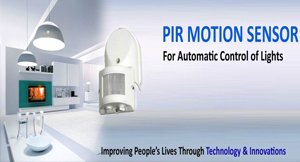
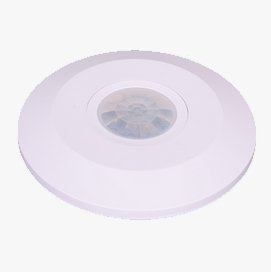
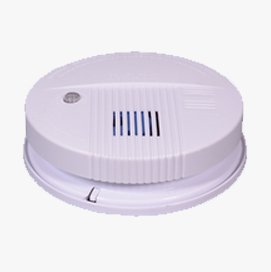
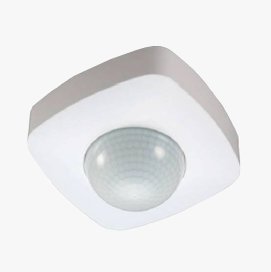
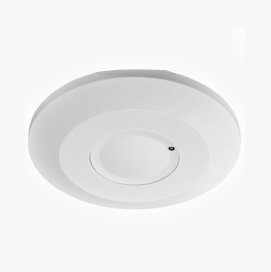
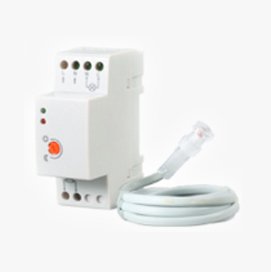
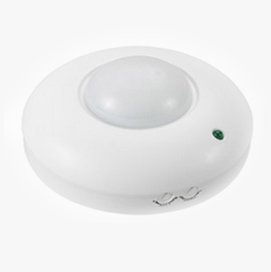
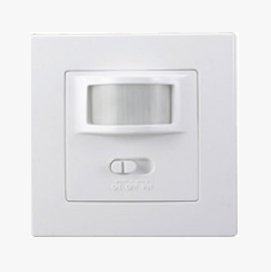
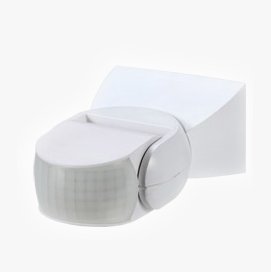
360° Ceiling Mount PIR Sensor, HC-7B For Lights
• Stand alone 220V AC operation Room
• Can switch light load of up to 300 Watts
• Detection Range 3m radius at 10ft height
Energy Saving Smart Switch, HC-7C
• Rated Voltage: 230V AC 50Hz
• Detection Area: Max. 8 meters
• Detection Angle : Max. 90
• Protection Class : IP20
PIR MOTION Sensor For Light Control With Manual Override, HC-7D
• Rated Voltage: 230V AC 50Hz
• Detection Area: Max. 12 meters
• Detection Angle: Max. 180
PIR Motion Sensor For Lights, HC-7E
• Wall Mount Suitable
• Weatherproof - IP44
• Time & LUX Adjustment
• Patented Modern Design
Ceiling Mount PIR Motion Sensor With Light, HC-25A
• Rated Voltage: 230V AC 50Hz
• Detection Area: Max. 4 meters in radius
• Protection Class : IP20
Passive Infrared SenSwitch
LC-780
• Built-in photocell sensor
• Adjustable TIME & LUX control
• Works at 100 ~ 250 VAC
Halogen Lamps PIR Sensors HC-150W/500W
• PIR Motion Sensor with Floodlight
• Day and Night mode
• Time adjustment
• Selectable sensitivity of the detector
Energy Saving Auto-Switch,
LC-730
• Single switch box recess mount
• Temperature compensation
• Super wide angle detection
• Superior RFI/EMI immunity
Passive Infrared SenSwitch,
LC-720
• Wall/ceiling mount available
• Built-in CdS photocell sensor
• Adjustable LUX and TIME
• Works at 100 ~ 250 VAC
360° Ceiling Mount PIR SenSwitch LC-360HD
• Surface mount technology production
• Built-in CdS photocell light sensor
• Recess mountable with MB-360
Lighting: Occupancy Sensors / Energy Saving Sensors
General Information
Occupancy sensors detect the presence or absence of people and turn lights on and off accordingly. They may reduce lighting energy consumption by 50 percent or more in some circumstances, but the savings for any given installed sensor can be much less. As a result, it's important to carefully consider a wide variety of issues before installing an occupancy sensor in any specific location.
They are used most effectively in spaces that are often unoccupied, including some offices, warehouses, storerooms, restrooms, loading docks, corridors, stairwells, office lounges, and conference rooms. Open-plan office spaces, where one or more people may be moving in and out throughout the course of the workday, are not good candidates for occupancy sensors.
What Are the Options?
The two most common sensor types are passive infrared, which require a direct line of sight to the movement of infrared (heat) sources, and ultrasonic, which detect any movement, human or otherwise (for example, curtains). read more